
ENGAGE
Teachers With Vision
5E
ENGAGE
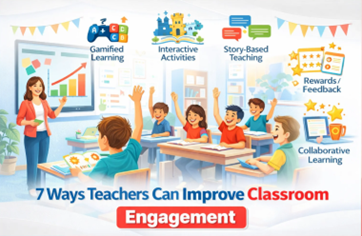
5E Instructional Model, the Engage phase serves as the critical “hook” that sets the stage for student-led inquiry and learning.
The first phase of the 5E Model engages students by having them mentally focus on a phenomenon, object, problem, situation, or event. The activities in the Engage phase are designed to help students make connections between past and present learning experiences, expose prior conceptions, and organize thinking toward the essential questions and learning outcomes of the learning sequence.
The role of the teacher in the Engage phase is to present a situation, identify the instructional task, and set the rules and procedures for the activities. The teacher also structures initial discussions to reveal the range of ideas, experiences, and language that students use which become resources for upcoming lessons.
The Engage phase is the first stage of the 5E cycle where the teacher captures students’ interest and motivates them to learn by focusing their attention on a specific phenomenon, problem, or event. Its primary goals are to:
- Pique curiosityand wonder.
- Activate prior knowledgeto connect past learning to current concepts.
- Uncover existing misconceptionsstudents may have about the topic.
- Types of Engagement Activities
Engagement can take several forms depending on the subject matter:
- Visual/Multimedia:Showing short, captivating video clips, intriguing images, or high-interest animations without immediately explaining the science behind them.
- Demonstrative:Performing a “discrepant event” or a surprising experiment (e.g., a magic trick with magnets) that contradicts students’ expectations.
- Interactive/Collaborative:Using digital polls, brainstorming sessions, or KWL (Know, Want to Know, Learned) charts to elicit initial ideas.
- Narrative:Telling a relevant story or presenting a real-world dilemma that requires a solution.
- Approaches to Engagement
Effective teachers use these strategic approaches during this phase:
- Facilitator Role:The teacher acts as a guide rather than a lecturer, asking open-ended questions like “Why did this happen?” instead of providing answers.
- Cognitive Conflict:Creating a “gap” in understanding where students recognize they cannot explain a phenomenon with their current knowledge, motivating them to investigate further.
- Prior Experience Connection:Intentionally linking the lesson to students’ personal lives or common everyday experiences to make the content relatable.
- Merits and Demerits
Merits (Advantages) | Demerits (Challenges) |
Increases Motivation: Grabs attention early, reducing classroom disruptions and passive behavior. | Time Consuming: Planning and executing an effective “hook” can take away from direct instruction time if not managed well. |
Identifies Gaps: Allows teachers to adjust the lesson in real-time by discovering what students already know or misunderstand. | Risk of Over-Stimulation: Some high-interest activities might distract students from the actual learning objective. |
Promotes Ownership: Encourages students to ask their own questions, making them active participants in their learning. | Difficulty in Management: Inquiry-based “Engage” activities can be harder to manage in very large or poorly behaved classes. |
Long-term Retention: Connecting new info to existing mental frameworks helps students remember concepts longer. | Misconception Reinforcement: If not followed by “Explore” and “Explain,” initial wrong ideas might stick without correction. |
Student Behaviors
- Asks questions such as, “Why did this happen?” “What do I already know about this?” “What can I find out about this?” “How can this problem be solved?”
- Shows interest in the topic through curiosity and expression of wonderings
- Demonstrates engagement by expressing ideas, sharing observations, and creating initial models
- Expresses current understanding of a concept or idea
Teaching Strategies
- Raises questions or poses problems
- Elicits responses that uncover students’ current knowledge
- Helps students make connections to previous work
- Posts learning outcomes and explicitly references them in the lesson
- Invites students to express what they think
- Invites students to raise their own questions
1.Engage:In the Engage stage, students have their first encounter with the lesson topic. Through questions, thinking, and discussion, students begin to make connections between previous knowledge and the present learning experiences. This process of engagement helps assess current understanding, establishes the organizational groundwork for the lesson ahead, and stimulates student involvement in the anticipation of learning. This is the opportunity to grab the students’ attention and get them excited about what they will be learning. Teachers might ask questions, present a problem, or facilitate some discussion to engage and motivate students.
Stage I – Engage
Facilitating learning environment, learning activities and situations and focusing the minds of learners on the higher order learning tasks is the main purpose of this stage. As far as possible present real life situations to engage student’s attention on learning tasks.
The different ways of engaging learners are:
- Ask open ended questions
- Act out a problematic situation
- Define a problem
- Show a surprising event
- Note unexpected phenomena
- Consider possible responses to questions
- Present situations where student’s perceptions vary.
- In Lesson ENGAGE your students, grab their attention, pique their interest – avoid simply telling
- them what they will do. When you design your engagement
- Consider the objective – How does this apply to real life?
- What is a powerful way to illustrate this to students?
- What can I say as I present to spark their interest- to engage them.
- Write your engagement with your students’ reaction in mind.
LESSON PHASES:
PHASE PURPOSE EXAMPLES 1. ENGAGE • Create interest
• Reveal pre-existing ideas and beliefs (preconceptions)
• Brainstorming
• Concept mapping
• Question production
• Discrepant event
• Demonstrations
• Open-ended questions